- Free UK delivery · same-day dispatch before 3pm
- Independent third-party testing by PeptideVerify
- Shop all research peptides
- Learn: guides and research tools
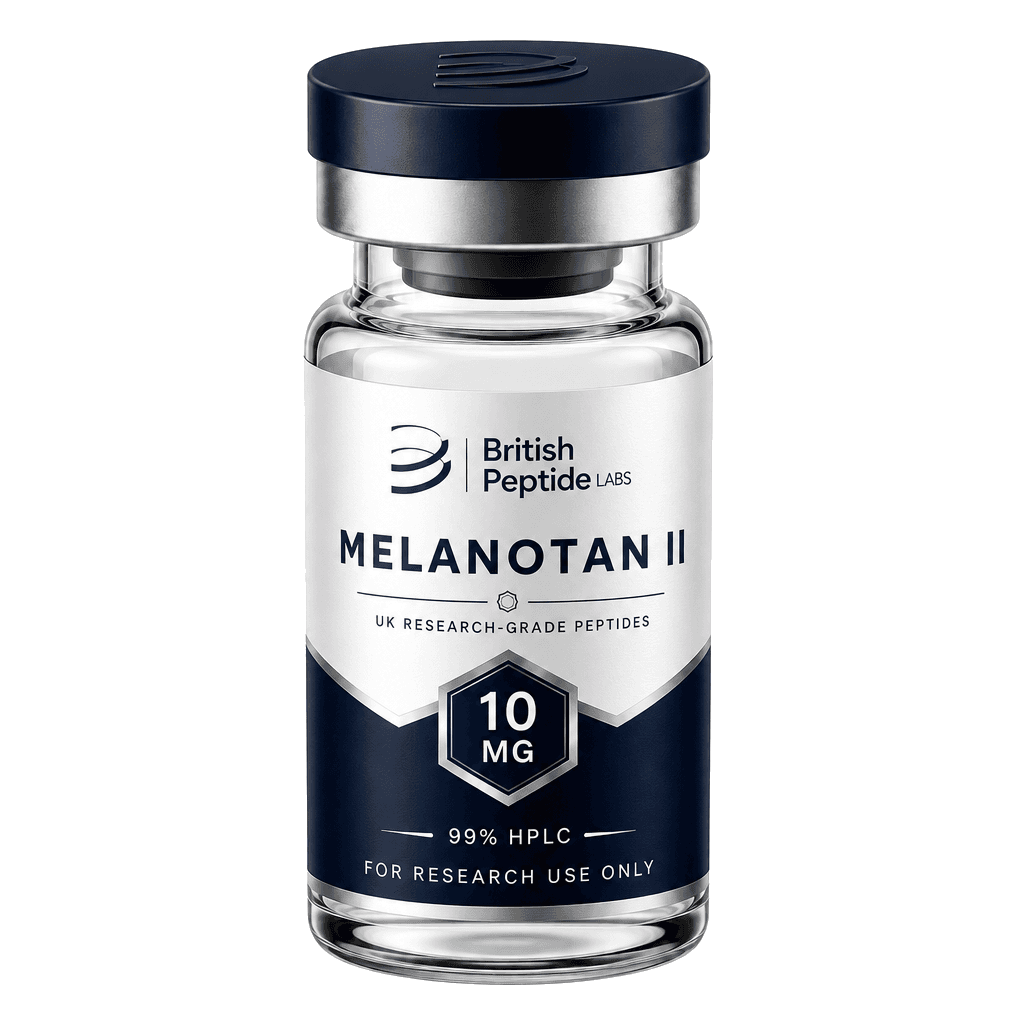
MT2
In stock · 10 mg
£30.00
£3.00/mg
Image 1 of 1
Melanocortin & Copper Peptides
Also written GHK copper · copper tripeptide-1 · Cu(II)-GHK
GHK-Cu is the copper(II) complex of the tripeptide glycyl-L-histidyl-L-lysine. Supplied as a lyophilised powder in a sealed vial for laboratory research. Available in a 50 mg presentation.
£0.40 per mg
≥99% purity (HPLC) · Independent third-party testing by PeptideVerify · COA Library
Order before 3pm for same-day dispatch.
Cut-off 3pm, Mon–Sat
Free next-day tracked delivery on every order · Royal Mail Tracked 24
GHK-Cu is the copper(II) complex of the tripeptide glycyl-L-histidyl-L-lysine (Gly-His-Lys). The peptide on its own has the formula C14H24N6O4. The complex listed here, C14H22CuN6O4, holds one copper ion per peptide and two hydrogen atoms fewer than the peptide and copper combined, consistent with a neutral complex of Cu(II) with the doubly deprotonated peptide. In complexes of this kind the copper is typically bound by the N-terminal amine, a backbone amide nitrogen and a nitrogen of the histidine imidazole ring.
The catalogue lists CAS number 89030-95-5. Analysis has to address both parts: mass spectrometry shows the characteristic isotope pattern of copper-63 and copper-65, while the copper content is established separately, because acidic chromatographic separations can strip the metal from the peptide. Each presentation is supplied as a lyophilised powder in a sealed vial.
GHK is the shortest chain in the catalogue: glycine, L-histidine and L-lysine, Gly-His-Lys, with a free N-terminal amine and a free C-terminal carboxylic acid. On its own it has the formula C14H24N6O4, a molecular weight of 340.38 g/mol and its own CAS number, 49557-75-7. GHK-Cu is that tripeptide holding one copper(II) ion, a 1:1 complex catalogued under CAS number 89030-95-5.
The complex is neutral. The peptide gives up two protons as it binds the metal, so the formula C14H22CuN6O4 has two hydrogens fewer than the peptide and copper added together, and the molecular weight is 401.91 g/mol. Copper makes up about 15.8% of that mass.
Glycine at the N-terminus has no side chain, histidine contributes the imidazole ring and lysine a side-chain amine that stays free in the complex.
Three nitrogen atoms hold the copper in one plane: the N-terminal amine of glycine, the deprotonated amide nitrogen between glycine and histidine, and a nitrogen of the histidine imidazole ring. A fourth position stays open to water or another ligand.
Copper(II) has partly filled d orbitals that absorb in the visible range, which is why the solid is blue to purple while the free GHK peptide is colourless. The colour of a vial is a quick visual sign that the metal is present; the copper content itself is measured by an elemental method such as ICP-OES.
The monoisotopic mass of the complex is 401.0999 Da, with the [M+H]+ ion expected at m/z 402.1071. Copper has two stable isotopes, copper-63 and copper-65, so the ion appears as a pair of peaks about 2 Da apart, the second roughly 45% the height of the first, which marks a copper-bearing species at a glance.
The free peptide without copper would appear as [M+H]+ at m/z 341.19, about 61 Da below the complex, so the same spectrum shows at once whether any of the peptide has lost its metal.
Reversed-phase HPLC measures the purity of the peptide component; acidic mobile phases can strip the copper from the peptide, so the metal is checked separately from the chromatography. The material is a blue to purple lyophilised solid in a sealed vial. The sealed vial is stored at 2–8 °C short term, or at −20 °C and below for long-term storage, protected from light and away from repeated freeze-thaw cycles.
| Property | GHK-Cu | BPC-157 |
|---|---|---|
| Residues | 3 | 15 |
| Molecular formula | C14H22CuN6O4 | C62H98N16O22 |
| Average molecular weight | 401.91 g/mol | 1419.53 g/mol |
| Monoisotopic mass | 401.0999 Da | 1418.7042 Da |
| Disulfide bridges | 0 | 0 |
GHK-Cu is a three-residue peptide holding one copper(II) ion, at 401.91 g/mol; BPC-157 is a linear fifteen-residue chain of 1419.53 g/mol with no metal. Both have free termini and no lipidation.
View BPC-157Order GHK-Cu directly from British Peptide Labs, a UK-registered company, as a sealed vial in 50 mg presentation, from £20. Every size is listed below with its vial price and its price per mg, so the presentations compare at a glance.
| Presentation | Price | £/mg |
|---|---|---|
| GHK-Cu 50 mg | £20.00 | £0.40 |
Priced at £0.40/mg, below the UK median of £0.47/mg across 19 suppliers in the October 2026 UK Research Peptide Price Index.
Choose a presentation in the buy box, add it to your basket and check out. Orders placed before 3pm Mon–Sat are packed the same working day and handed to Royal Mail Tracked 24, and your tracking number is emailed as soon as the parcel leaves us. Larger orders are welcome: add as many vials as your laboratory needs in a single basket.
For what other UK suppliers charge, see our UK price per mg data, updated every month.
GHK-Cu is the copper(II) complex of the tripeptide glycyl-L-histidyl-L-lysine. Supplied as a lyophilised powder in a sealed vial for laboratory research. Available in a 50 mg presentation. Store the sealed vial at 2–8 °C for short-term storage, or at −20 °C and below for long term. Protect from light and avoid repeated freeze-thaw cycles. For research use only. Not for human or veterinary use. Sold strictly for in-vitro laboratory research; not for diagnosis or treatment.
GHK-Cu is the copper(II) complex of the tripeptide glycyl-L-histidyl-L-lysine. It is supplied in a sealed vial as a blue to purple lyophilised powder, in a 50 mg presentation.
Read the Learn articleYes. Copper tripeptide-1, GHK copper and Cu(II)-GHK are other names for GHK-Cu: the 1:1 copper(II) complex of glycyl-L-histidyl-L-lysine, catalogued under CAS number 89030-95-5.
GHK is the tripeptide Gly-His-Lys on its own, C14H24N6O4 at 340.38 g/mol (CAS 49557-75-7). GHK-Cu is the same peptide bound to one copper(II) ion, C14H22CuN6O4 at 401.91 g/mol (CAS 89030-95-5).
401.91 g/mol for the neutral complex C14H22CuN6O4. Its monoisotopic mass is 401.0999 Da, so the [M+H]+ ion is expected at m/z 402.1071, with a copper-65 partner peak about 2 Da higher. The free peptide, without copper, would appear at m/z 341.19.
Three nitrogens: the N-terminal amine of glycine, the deprotonated amide nitrogen between glycine and histidine, and a nitrogen of the histidine imidazole ring. A fourth, open position takes water or another ligand.
Blue to purple. The colour comes from the copper(II) ion, whose d orbitals absorb visible light; the free GHK peptide without copper is a colourless solid.
One copper ion per peptide, which is about 15.8% of the complex by mass (63.55 g/mol of copper in 401.91 g/mol). The copper content is confirmed by an elemental method such as ICP-OES.
That the ion carries copper. Copper-63 and copper-65 occur in a ratio of roughly 69 to 31, so each copper-bearing ion appears as two peaks about 2 Da apart, the second near 45% of the first.
Order GHK-Cu directly from British Peptide Labs, a UK-registered company. It is supplied in a sealed 50 mg vial at £20.00 (£0.40 per mg). The 50 mg vial is in stock. Every vial is ≥99% purity (HPLC), with independent third-party testing by PeptideVerify. Orders placed before 3pm Mon–Sat leave the same day by Royal Mail Tracked 24 for next-day tracked delivery.
GHK-Cu comes in one sealed vial: 50 mg at £20.00 (£0.40 per mg). Delivery is free on every order.
GHK-Cu is catalogued in the Melanocortin & Copper Peptides research area, where compounds are grouped by molecular class. The research area page lists each of them with its identifiers.
Melanocortin & Copper Peptides research areaGHK-Cu has independent third-party testing by PeptideVerify: reversed-phase HPLC measures purity, at ≥99% (HPLC), and LC-MS confirms identity against the expected mass.
Open the COA LibraryIn stock · 10 mg
£30.00
£3.00/mg
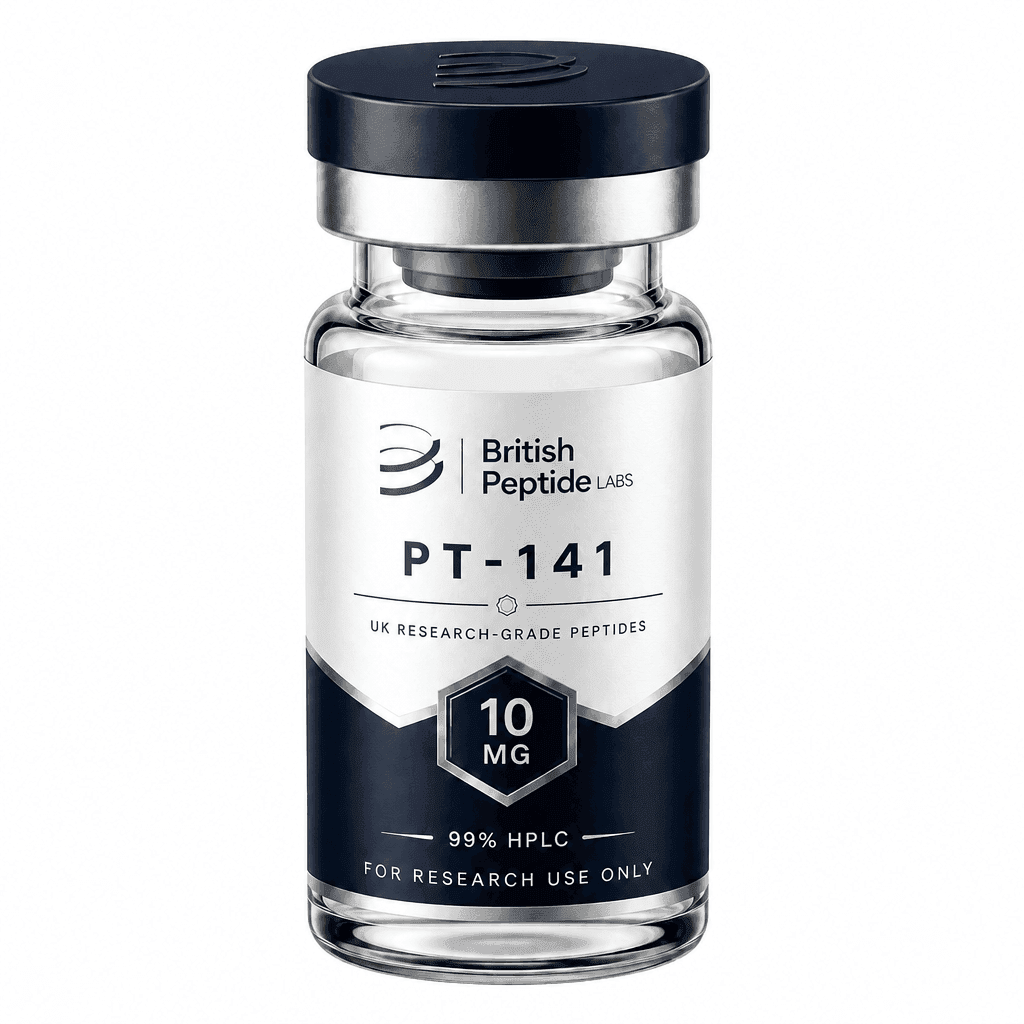
Out of stock · 10 mg
£40.00
£4.00/mg
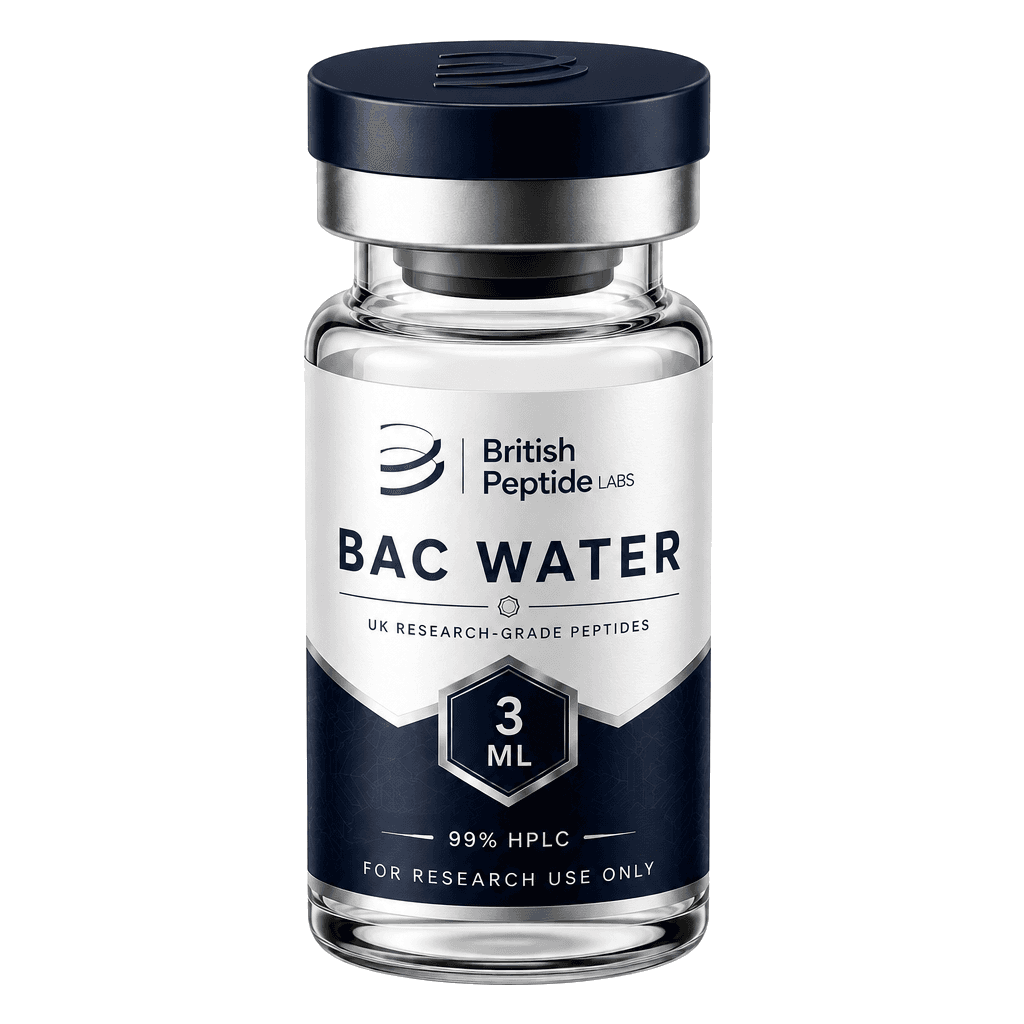
In stock
£6.00