- Free UK delivery · same-day dispatch before 3pm
- Independent third-party testing by PeptideVerify
- Shop all research peptides
- Learn: guides and research tools
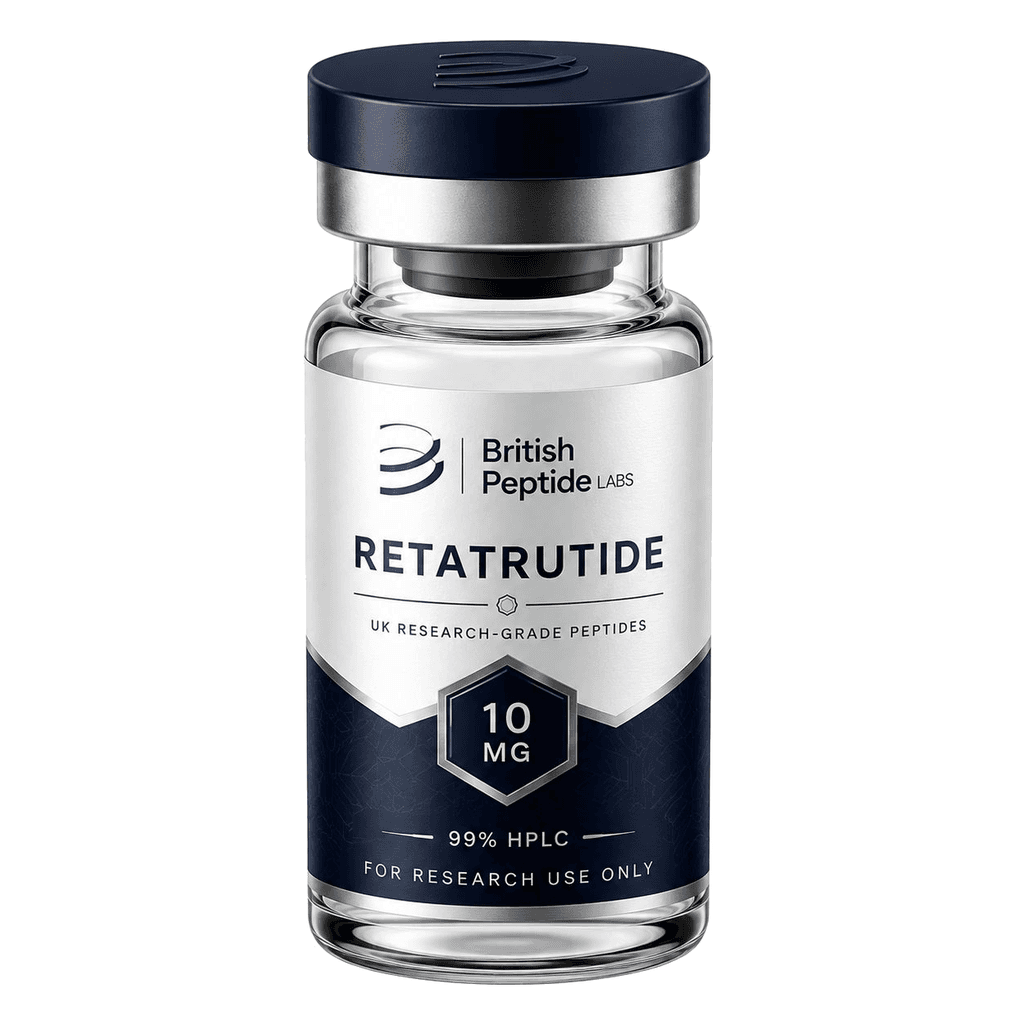
GLP-3
In stock
£59.00
£5.90/mg
Image 1 of 1
Incretin & Amylin Analogues
Cagrilintide is a synthetic lipidated amylin-analogue peptide. Supplied as a lyophilised powder in a sealed vial for laboratory research. Available in a 10 mg presentation.
£7.50 per mg
≥99% purity (HPLC) · Independent third-party testing by PeptideVerify · COA Library
Free next-day tracked delivery on every order · Royal Mail Tracked 24
Cagrilintide is a synthetic lipidated amylin-analogue peptide. Its chain of thirty-seven amino acid residues contains a disulfide bridge between its two cysteines, which closes a short ring near the N-terminus, and ends in a C-terminal prolinamide. At the N-terminus, a C20 dicarboxylic acid is attached through a γ-glutamic acid residue, so the lipid group sits at the start of the chain rather than on a side chain.
The disulfide bridge and the lipid group are the two features an analysis has to confirm: the bridge through the mass, which is 2 Da lower than for the open form with two free thiols, and the lipid group through the mass and its strong retention in reversed-phase HPLC. Its CAS number, molecular formula, molecular weight and sequence are listed in the specifications on this page. Each presentation is supplied as a lyophilised powder in a sealed vial.
The peptide chain reads KCNTATCATQRLAEFLRHSSNNFGPILPPTNVGSNTP-NH2 in one-letter code: thirty-seven residues from Lys1 to a C-terminal prolinamide, Pro37-NH2. Cys2 and Cys7 are joined by a disulfide bridge, which closes a six-residue ring, Cys2 to Cys7, at the N-terminal end of the chain.
The chain has no tryptophan and no tyrosine; its two phenylalanines, at positions 15 and 23, absorb only weakly, so HPLC reads the peptide mainly in the peptide-bond region around 214 nm. Four prolines sit in the C-terminal third of the chain, three of them in the stretch Pro25 to Pro29.
Lys1, Arg11, Arg17 and His18 carry its basic side chains and Glu14 its one acidic side chain. With the free carboxyls of the diacid and the γ-glutamic acid linker, and the amidated C-terminus, the calculated net charge near pH 7 is about +0.2.
The α-amine of Lys1 is acylated with a C20 fatty diacid through a γ-glutamic acid linker, so the lipid group caps the start of the chain instead of sitting on a side chain; the ε-amine of Lys1 stays free. Written in full, the conjugate begins HOOC-(CH2)18-CO-γGlu-Lys, and the diacid's far end is a free carboxylic acid.
The molecular formula C194H312N54O59S2 covers chain, linker and diacid as one molecule, and its two sulfur atoms are the two cysteines of the bridge. The diacid gives strong retention in reversed-phase HPLC, while the bridge shows in the mass: the closed ring is 2 Da lighter than the same chain with two free thiols.
Because the α-amine is acylated, Edman sequencing cannot start at the N-terminus, so the sequence is confirmed by tandem mass spectrometry, which reads the chain from fragment ions on both sides of each peptide bond.
Calculated from the formula, the monoisotopic mass is 4406.25 Da and the average molecular weight 4409.01 g/mol. The [M+H]+ ion is calculated at m/z 4407.26, and electrospray shows mainly multiply charged ions, such as [M+3H]3+ near m/z 1469.76 and [M+4H]4+ near m/z 1102.57, deconvoluted to one neutral mass that confirms both the lipid group and the closed bridge.
Its five asparagines and one glutamine are the sites most able to deamidate, each a +0.98 Da shift that high-resolution mass spectrometry resolves from the main ion.
Reversed-phase HPLC gives purity as the main peak's share of total peak area. The material is a white to off-white lyophilised solid in a sealed vial. The sealed vial is stored at 2–8 °C short term, or at −20 °C and below for long-term storage, protected from light and away from repeated freeze-thaw cycles.
Order Cagrilintide directly from British Peptide Labs, a UK-registered company, as a sealed vial in 10 mg presentation. Every size is listed below with its vial price and its price per mg, so the presentations compare at a glance.
| Presentation | Price | £/mg |
|---|---|---|
| Cagrilintide 10 mgOut of stock | £75.00 | £7.50 |
Priced at £7.50/mg, below the UK median of £7.55/mg across 6 suppliers in the October 2026 UK Research Peptide Price Index.
Choose a presentation in the buy box, add it to your basket and check out. Orders placed before 3pm Mon–Sat are packed the same working day and handed to Royal Mail Tracked 24, and your tracking number is emailed as soon as the parcel leaves us. Larger orders are welcome: add as many vials as your laboratory needs in a single basket.
For what other UK suppliers charge, see our UK price per mg data, updated every month.
Cagrilintide is a synthetic lipidated amylin-analogue peptide. Supplied as a lyophilised powder in a sealed vial for laboratory research. Available in a 10 mg presentation. Store the sealed vial at 2–8 °C for short-term storage, or at −20 °C and below for long term. Protect from light and avoid repeated freeze-thaw cycles. For research use only. Not for human or veterinary use. Sold strictly for in-vitro laboratory research; not for diagnosis or treatment.
Cagrilintide is a synthetic lipidated amylin-analogue peptide. It is supplied in a sealed vial as a white to off-white lyophilised powder, in a 10 mg presentation.
Read the Learn articleKCNTATCATQRLAEFLRHSSNNFGPILPPTNVGSNTP-NH2, with a disulfide bridge between Cys2 and Cys7. The C20 diacid group on the N-terminal amine is written separately, as HOOC-(CH2)18-CO-γGlu, ahead of Lys1.
4406.25 Da, calculated from the formula C194H312N54O59S2, against an average molecular weight of 4409.01 g/mol. The [M+H]+ ion is calculated at m/z 4407.26, and the [M+3H]3+ ion near m/z 1469.76 is a typical electrospray reading.
Between Cys2 and Cys7, the chain's only two cysteines. The bridge closes a six-residue ring at the N-terminal end, and the closed form weighs 2 Da less than the chain with two free thiol groups.
On the α-amine of Lys1, the N-terminus itself. A C20 fatty diacid is joined there through a γ-glutamic acid linker, which leaves the lysine side chain free and the C-terminus as a prolinamide.
1415456-99-3, with the molecular formula C194H312N54O59S2 and a molecular weight of 4409.01 g/mol. PubChem lists the compound as CID 171397054.
Thirty-seven, all coded amino acids, from Lys1 to Pro37. The chain closes with a C-terminal amide, and the γ-glutamic acid linker and C20 diacid sit outside the residue count. Two of them, Cys2 and Cys7, form the disulfide bridge.
Order Cagrilintide directly from British Peptide Labs, a UK-registered company. It is supplied in a sealed 10 mg vial at £75.00 (£7.50 per mg). Every vial is ≥99% purity (HPLC), with independent third-party testing by PeptideVerify. Orders placed before 3pm Mon–Sat leave the same day by Royal Mail Tracked 24 for next-day tracked delivery.
Cagrilintide comes in one sealed vial: 10 mg at £75.00 (£7.50 per mg). Delivery is free on every order.
Cagrilintide is catalogued in the Incretin & Amylin Analogues research area, where compounds are grouped by molecular class. The research area page lists each of them with its identifiers.
Incretin & Amylin Analogues research areaCagrilintide has independent third-party testing by PeptideVerify: reversed-phase HPLC measures purity, at ≥99% (HPLC), and LC-MS confirms identity against the expected mass.
Open the COA LibraryIn stock
£59.00
£5.90/mg
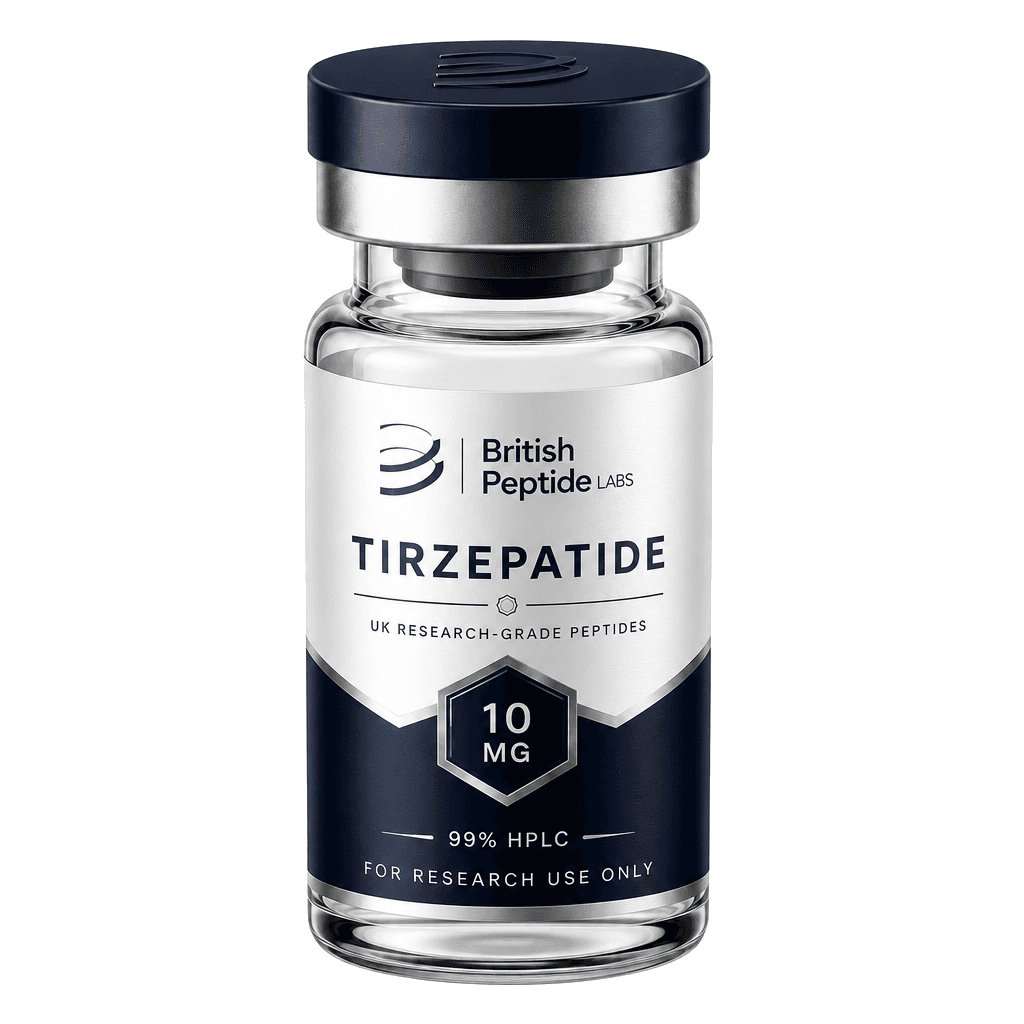
In stock
£60.00
£6.00/mg
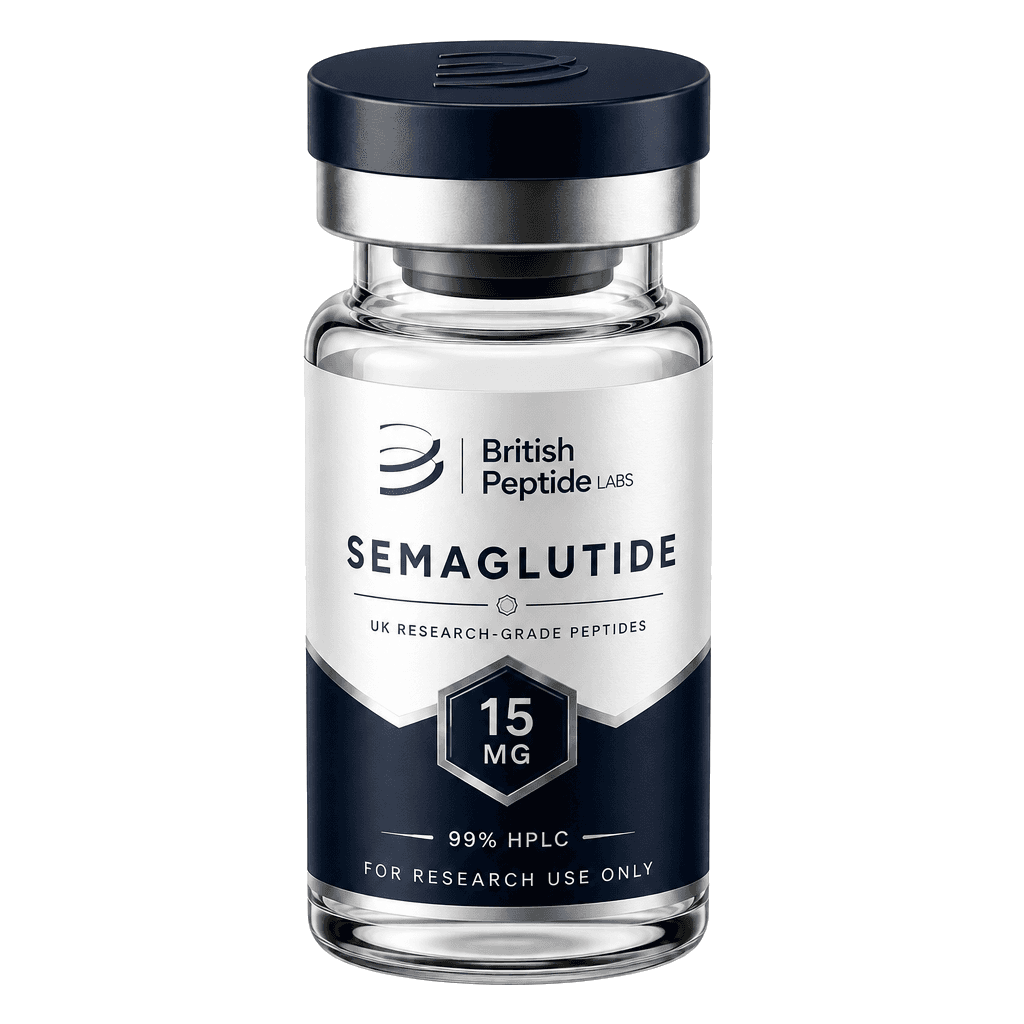
In stock
£50.00
£3.33/mg
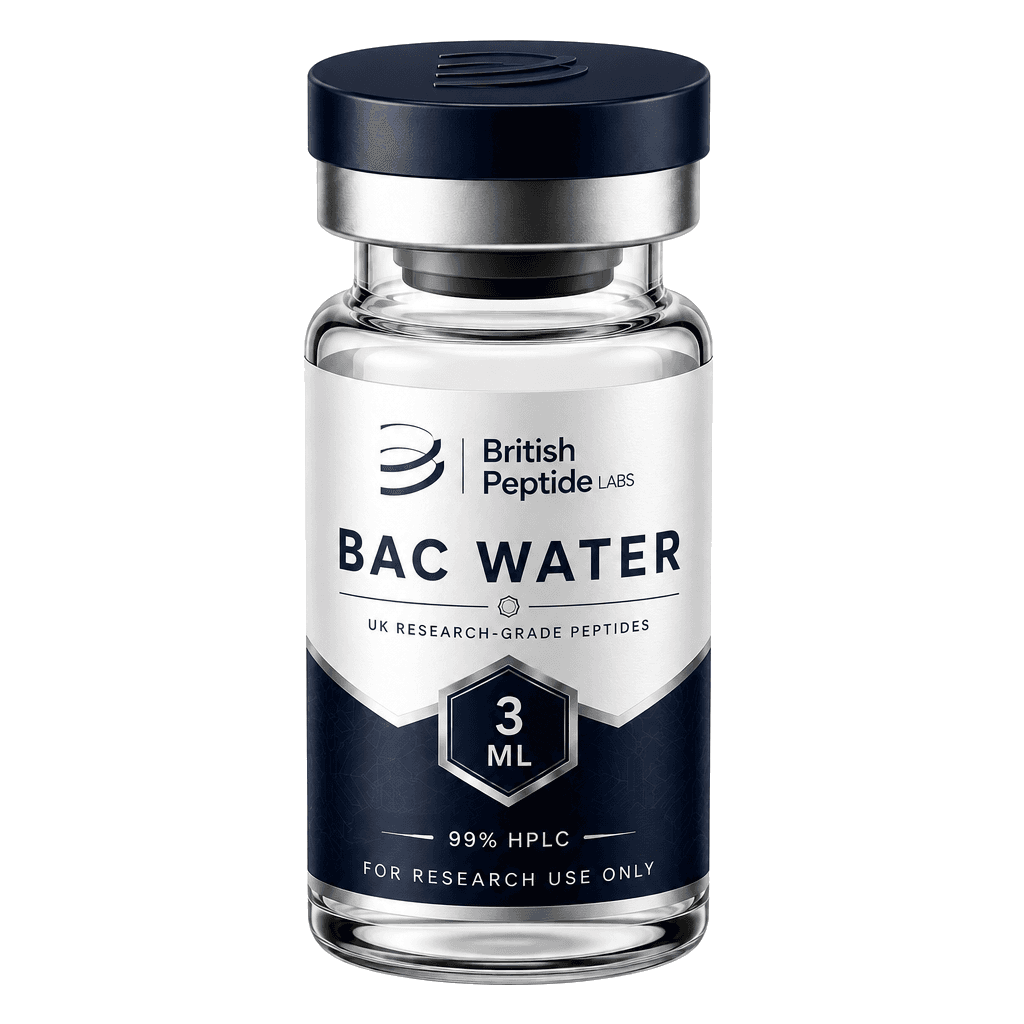
In stock
£6.00