- Free UK delivery · same-day dispatch before 3pm
- Independent third-party testing by PeptideVerify
- Shop all research peptides
- Learn: guides and research tools
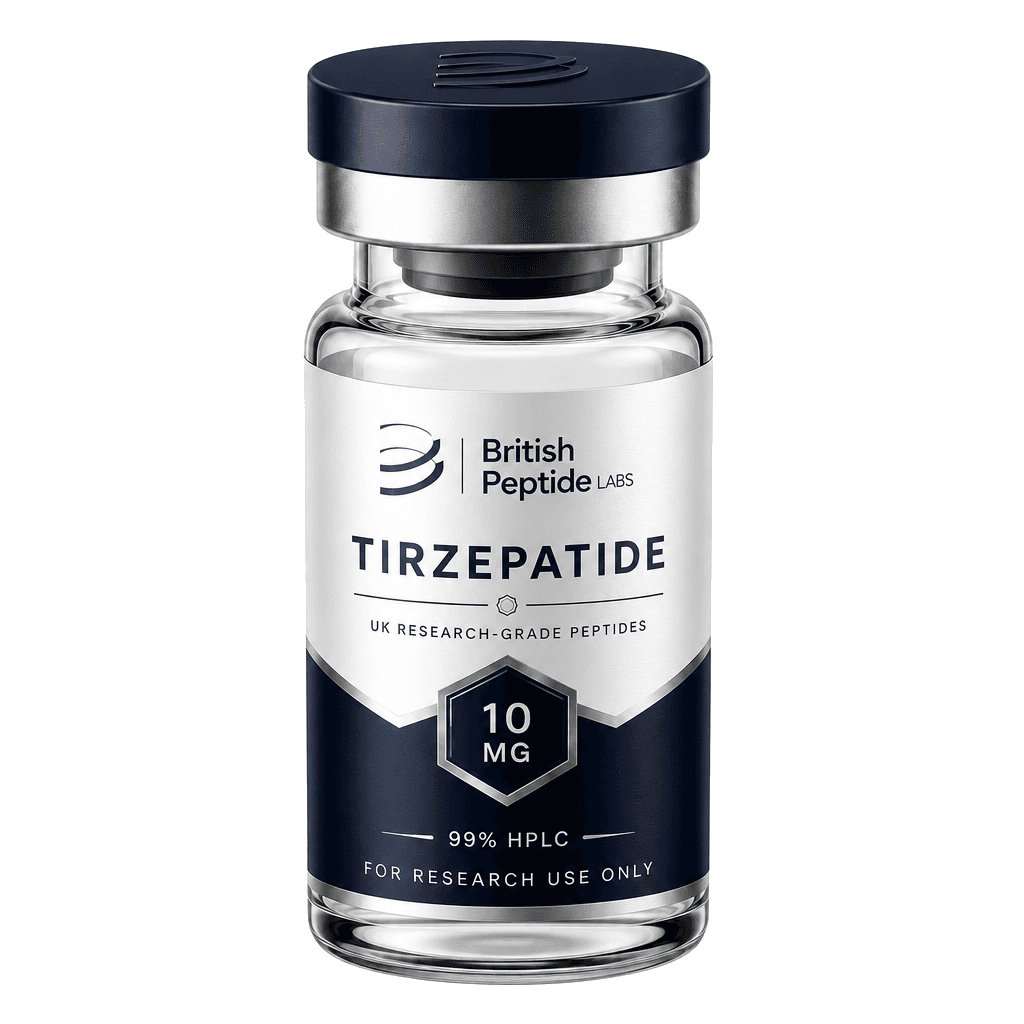
Tirzepatide
In stock
£60.00
£6.00/mg
Research area
For research use only. Not for human or veterinary use. Sold strictly for in-vitro laboratory research; not for diagnosis or treatment.
The compounds in this research area are synthetic peptide analogues of the incretin hormones and of amylin, built on chains of roughly thirty to forty amino acid residues. What they share is a modified natural backbone. Several carry the non-proteinogenic residue α-aminoisobutyric acid (Aib) at selected positions, and each is lipidated: a long-chain dicarboxylic acid is attached to the peptide through a linker. By receptor class, semaglutide is a GLP-1 receptor agonist peptide, tirzepatide a GIP and GLP-1 receptor agonist peptide, GLP-3 (retatrutide) a GIP, GLP-1 and glucagon receptor agonist peptide, and cagrilintide a lipidated amylin analogue. Where catalogued, molecular weights run from 4113.58 g/mol for semaglutide (C187H291N45O59) to 4813.45 g/mol for tirzepatide (C225H348N48O68). Each compound is supplied as a lyophilised solid in a sealed vial.
In stock
£60.00
£6.00/mg
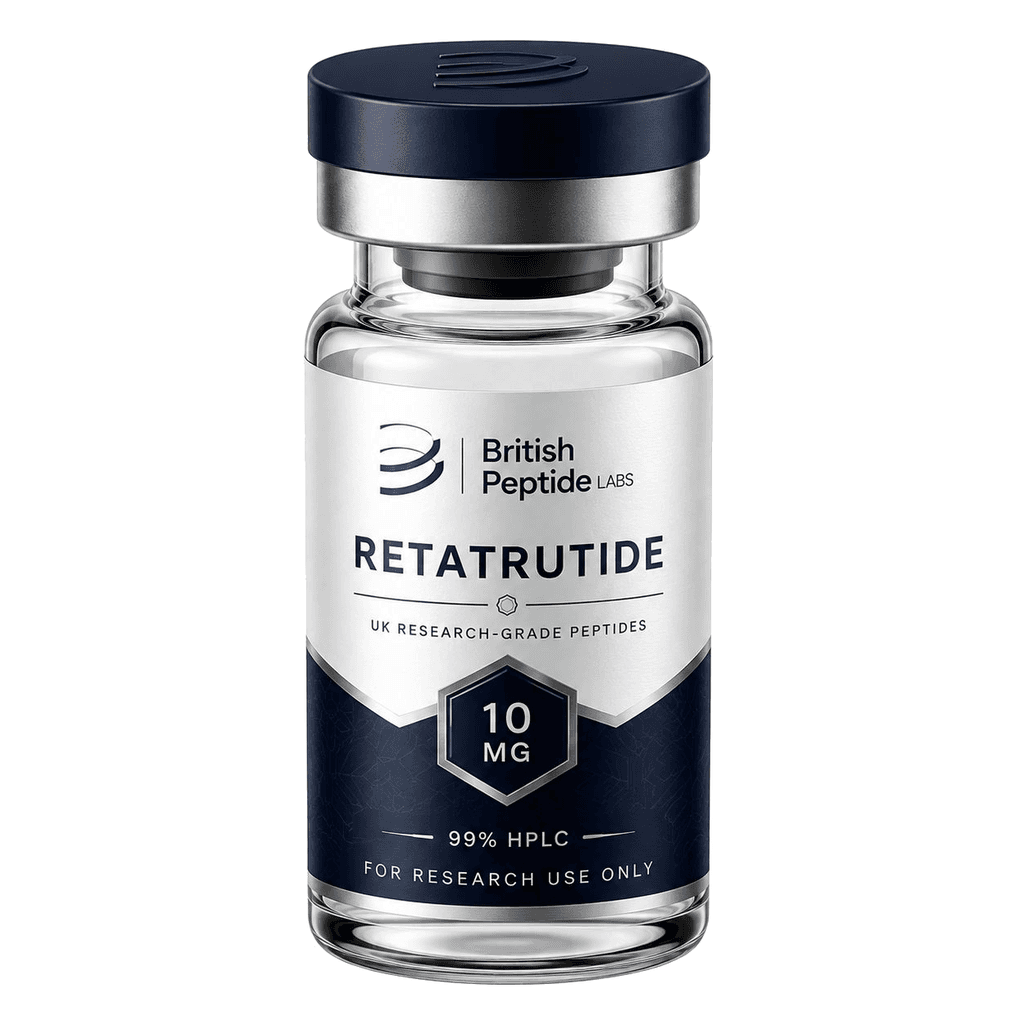
In stock
£59.00
£5.90/mg
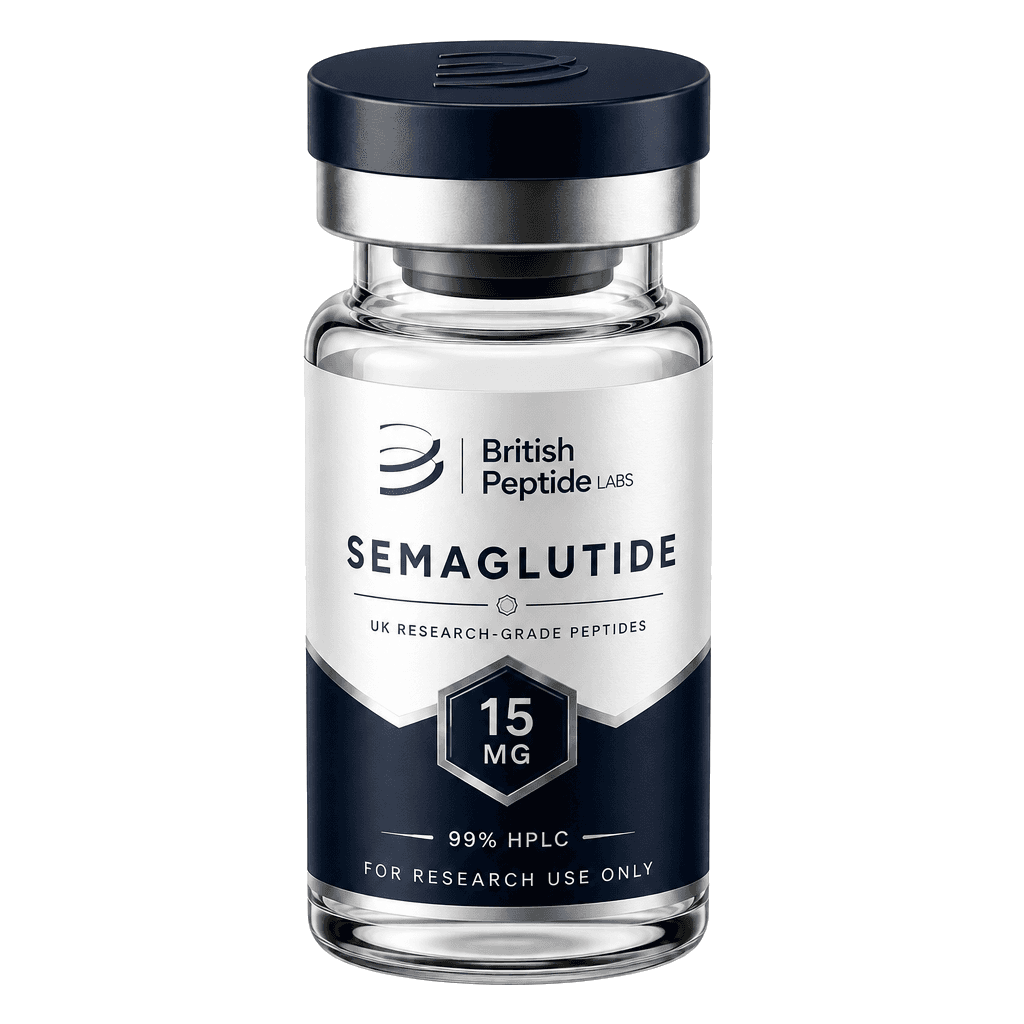
In stock
£50.00
£3.33/mg
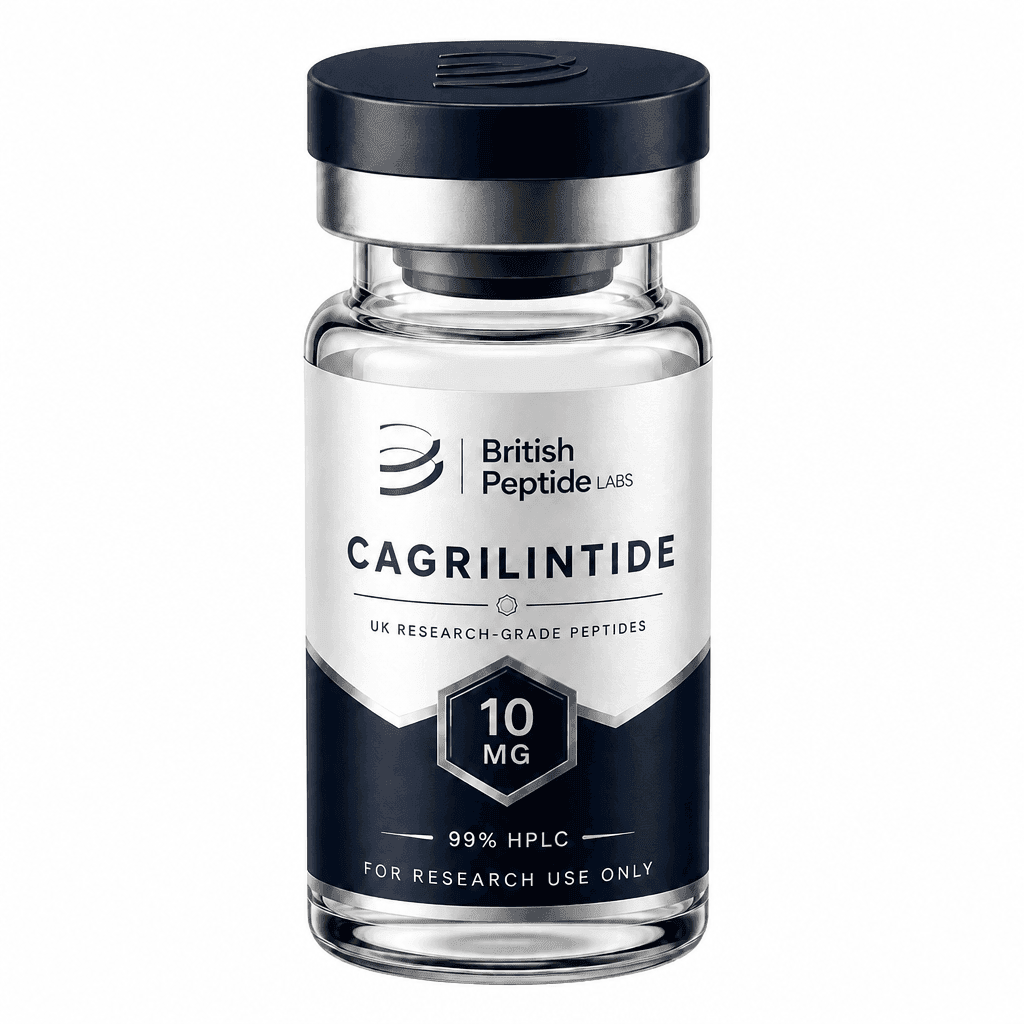
Out of stock · 10 mg
£75.00
£7.50/mg
Every compound in this research area is a peptide chain with a lipid group covalently attached, and the way that group is fixed to the chain is the clearest structural signature of the class. In semaglutide, a chain of thirty-one amino acid residues, the side chain of the lysine at position 20 carries an octadecanedioic (C18) diacid, joined through a γ-glutamic acid residue and two short ethylene-glycol-based spacer units. Tirzepatide is a linear chain of thirty-nine residues conjugated to a C20 dicarboxylic acid, and its sequence is based on that of GIP. Cagrilintide, a lipidated amylin analogue, is acylated at its N-terminus instead: a C20 diacid is attached through a γ-glutamic acid residue to a chain of thirty-seven residues.
Two further features recur. Semaglutide carries α-aminoisobutyric acid (Aib) at position 2, a non-proteinogenic residue with two methyl groups on its α-carbon; because that carbon bears no hydrogen, Aib has no stereocentre. Cagrilintide contains a disulfide bridge between its two cysteine residues, which closes a short ring near the N-terminus, and it ends in a C-terminal prolinamide. GLP-3 (retatrutide) is catalogued with the formula C221H342N46O68 and a molecular mass of 4731.4 g/mol; like the others, it is a synthetic lipidated peptide.
The attached diacid gives each molecule an amphiphilic character: a long hydrocarbon chain on an otherwise polar peptide. Where a molecular mass is catalogued, it lies between roughly 4.1 and 4.8 kDa, which places these compounds between short synthetic peptides and small proteins. Each molecular formula covers the peptide chain and the lipid group together, so the identifiers describe the whole conjugate rather than the chain alone.
The table lists every compound in this area with its CAS number, molecular formula, molecular weight and residue count, followed by the lowest price per milligram across its vials. The CAS number identifies the substance itself, whatever the vial. The formula and the molecular weight cover the peptide chain and the lipid group together, while the residue count covers the amino acids alone, so the two figures read most clearly together. The price per milligram divides each vial's price by its stated content, which puts every vial on one scale.
| Compound | CAS number | Molecular formula | Molecular weight | Residues | From, per mg |
|---|---|---|---|---|---|
| Tirzepatide | 2023788-19-2 | C225H348N48O68 | 4813.45 g/mol | 39 | £3.00 |
| GLP-3 | 2381089-83-2 | C221H342N46O68 | 4731.4 g/mol | £3.63 | |
| Semaglutide | 910463-68-2 | C187H291N45O59 | 4113.58 g/mol | 31 | £2.95 |
| Cagrilintide | 1415456-99-3 | C194H312N54O59S2 | 4409.01 g/mol | 37 | £7.50 |
The area is defined by structure rather than by any one sequence. Every compound in it combines a peptide chain of roughly thirty to forty residues, modelled on a natural peptide backbone, with a long-chain dicarboxylic acid attached through a linker. Those two features together set the class apart from the rest of the catalogue: the chains are long enough to give multiply charged mass spectra, and the lipid group gives each molecule its amphiphilic character and its long reversed-phase retention.
Because each compound is a conjugate, its identity rests on two things at once: the amino acid sequence of the chain, and the structure and position of the attached lipid group with its linker. A certificate for a compound in this area therefore confirms the whole molecule, with a measured mass that covers chain, linker and diacid together. Each product page states the receptor class of its compound as a molecular fact, together with its full set of identifiers.
Supply follows one pattern across the area. Each compound is a lyophilised solid in a sealed vial, and its product page carries the full identity details, from synonym and CAS number to formula and molecular weight. The table on this page gathers those identifiers in one place, so the whole class can be read row by row before moving to an individual compound.
Lipidated peptides of this length are demanding analytes. In reversed-phase HPLC the hydrocarbon chain lengthens retention considerably, so methods for this class typically run steeper organic gradients than those used for short unmodified peptides, often on C8 or C18 columns with an acidified water and acetonitrile mobile phase. Related substances of interest include deletion and truncation sequences from synthesis, forms lacking or carrying an altered lipid side chain, and oxidised or deamidated variants, several of which elute close to the main peak.
Identity is confirmed by mass spectrometry. At masses above 4 kDa, electrospray ionisation gives a series of multiply charged ions, and the spectrum is deconvoluted to a neutral mass that is compared with the average mass calculated from the molecular formula. For molecules of this mass the monoisotopic peak is weak, so the average mass is the more practical comparison. A certificate of analysis for a compound in this class shows a reversed-phase chromatogram with the area of the main peak and a measured mass against the expected value.